

How to Make Croissants requires patience, precision, and high-quality ingredients to achieve the perfect flaky layers. At first, you need to prepare a dough using flour, yeast, sugar, salt, and milk. Then, the key step is laminating the dough with butter, which involves folding and rolling multiple times to create distinct layers. After that, the dough is cut into triangles, rolled into the classic crescent shape, and left to proof until puffy. Finally, they are brushed with egg wash and baked to golden perfection, resulting in a crispy exterior and a soft, buttery interior.

Croissants are one of the most loved pastries worldwide. These delicious, flaky treats originated in France and are now enjoyed in bakeries across the globe. Making croissants at home may seem intimidating, but with patience and practice, anyone can master this technique. In this guide, you will learn how to make croissants step by step.
If you love baking, don’t stop at croissants! Try making homemade treats like Mozzarella Cheese, The Best Lemon Pound Cake, or Watermelon Ice Cream. For cookie lovers, check out the Toll House Cookie Recipe or No-Bake Chocolate Oatmeal Cookies. If you prefer classic desserts, the Easy Banana Pudding Recipe and Easy Fudge Recipe are must-tries. And for a Southern twist, don’t miss the Southern Cornbread Recipe. Explore these delicious recipes and bring more homemade goodness to your kitchen!
Croissant recipe ingredients
To make croissants, you will need a few essential ingredients.
- 4 cups (500g) all-purpose flour
- 1/4 cup (50g) sugar
- 2 tsp salt
- 1 tbsp instant yeast
- 1 1/4 cups (300ml) warm milk
- 1 cup (225g) unsalted butter (for laminating)
- 1 egg (for egg wash)
Using high-quality butter is crucial because it impacts the texture and flavor. European-style butter with high fat content is best for making croissants.

Essential Tools for Making Croissants
Having the right tools can make the process easier.
- Rolling pin
- Sharp knife or pizza cutter
- Pastry brush
- Baking sheet
- Parchment paper
If you don’t have a pastry brush, you can use a spoon for applying the egg wash.

Step-by-Step How to Make Croissants
Preparing the Dough
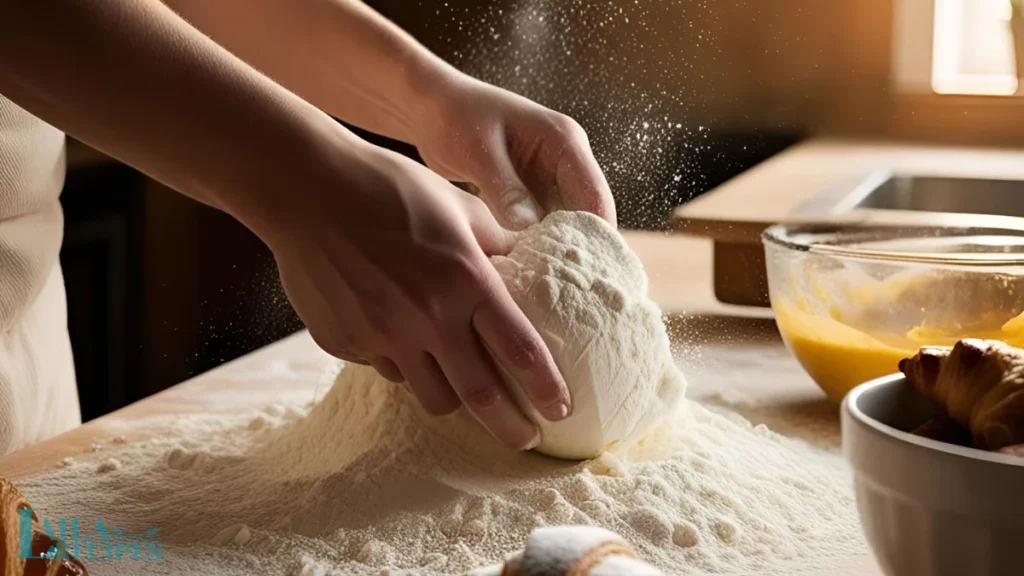
At first, mix the flour, sugar, salt, and yeast in a bowl. Then, gradually add warm milk and knead until a smooth dough forms. After that, let the dough rest in the refrigerator for at least 2 hours.
Making the Butter Block
Basically, flatten the cold butter into a square between two sheets of parchment paper. Then, chill it again before incorporating it into the dough.
Laminating the Dough
Before rolling, ensure the dough is cold. Roll it out, place the butter block in the center, and fold it over. After that, roll and fold three times, chilling between each fold.
Shaping the Croissants
Roll out the laminated dough into a thin rectangle. Then, cut it into triangles and roll each from the base to the tip to form a crescent shape.
Proofing the Dough
During proofing, place the shaped croissants on a baking sheet and cover them lightly. Let them rise for about 2 hours until they are puffy and soft.
Baking the Croissants
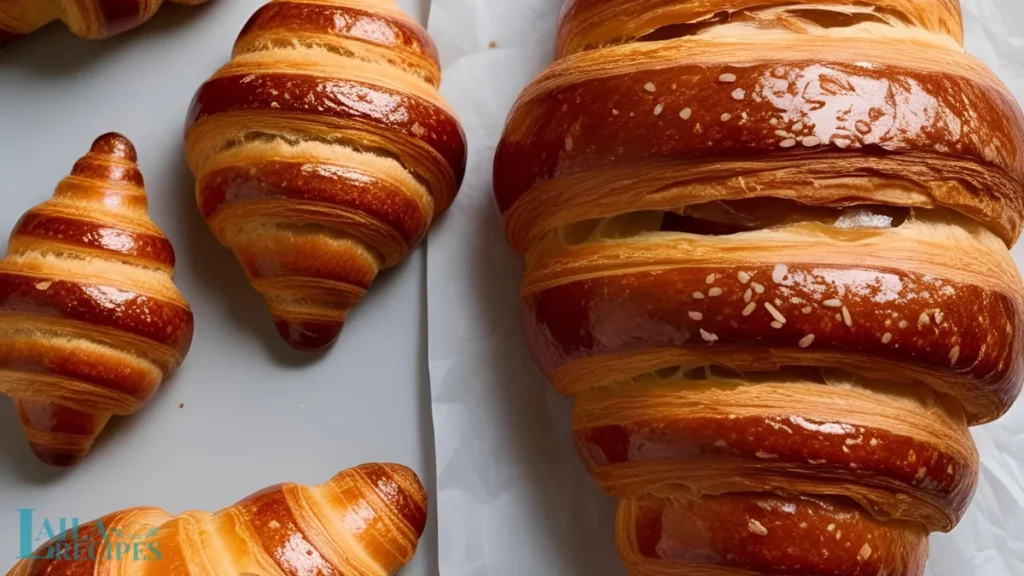
Before baking, brush each croissant with egg wash. Then, bake in a preheated oven at 375°F (190°C) for 20-25 minutes until golden brown.
Tips for Perfect Croissants
- Use cold butter to ensure flakiness.
- Don’t rush the resting time.
- Avoid over-proofing the dough.
Variations of Croissants
- Chocolate Croissants: Add chocolate sticks before rolling.
- Almond Croissants: Fill with almond cream and top with sliced almonds.
- Savory Croissants: Fill with ham and cheese before baking.
How to Store and Reheat Croissants
- Store croissants in an airtight container for up to 2 days.
- To reheat, place them in a 300°F (150°C) oven for 5 minutes.
How to Make Croissants with Puff Pastry
At first, using puff pastry makes the croissant-making process easier and quicker. Because traditional croissant dough requires multiple folds and resting periods, using store-bought puff pastry saves time while still giving a flaky texture. Before starting, ensure the pastry is cold but pliable.
After that, roll out the puff pastry on a lightly floured surface to prevent sticking. Cut it into triangles, ensuring even sizes for uniform baking. Then, roll each triangle from the wider end to the pointed tip, forming a crescent shape. Finally, place them on a lined baking sheet, brush with egg wash, and bake at the right temperature. The result is golden, flaky croissants with a crispy outer layer and soft, buttery interior.
Easy Croissant Recipe
Firstly, an easy croissant recipe helps beginners make these delicate pastries without too much hassle. Instead of making laminated dough, you can use ready-made puff pastry. This saves time while still ensuring the desired flakiness.
So, to begin, preheat your oven and prepare a baking sheet. Roll out the puff pastry and cut it into even triangular shapes. Then, carefully roll each piece into a crescent shape and place them on the tray. Also, brushing them with an egg wash before baking gives a golden finish. Finally, bake until golden brown and crispy. Enjoy fresh croissants with jam, butter, or chocolate.
Professional Croissant Recipe
Before attempting a professional croissant recipe, understand that patience is key. Because the dough requires several folds and chill times, expect to dedicate at least 24 hours to the process.
Firstly, mix the flour, sugar, salt, yeast, and milk to form a soft dough. Afterward, let it rest before rolling and incorporating butter. Then, perform multiple folds and turns, chilling between each. Finally, cut and shape the dough, proof it until puffy, then bake at the correct temperature. Accordingly, this method ensures buttery, flaky layers that separate beautifully when baked.
Croissant Dough
Before making croissant dough, remember that proper lamination is essential. Because this process involves layering butter within the dough, it gives croissants their signature flaky texture.
During preparation, use cold butter and dough to prevent melting. Then, roll and fold the dough multiple times to create thin alternating layers. Basically, the more folds, the flakier the croissants. Afterward, let the dough rest overnight before shaping and baking. Finally, always proof the shaped croissants properly to achieve a light, airy texture.
Croissant Baking Temperature and Time
Firstly, baking croissants at the right temperature ensures a perfect texture. Because they need to rise before setting, the oven should be hot enough to create a puff without burning.
At first, preheat your oven to 375°F (190°C). Then, place the croissants on a lined tray, ensuring enough space for expansion. Bake for 18-22 minutes or until golden brown. After that, let them cool slightly before serving. Finally, avoid opening the oven door too early, as this can cause the layers to collapse.
Best Croissant Recipe
So, what makes the best croissant recipe? Firstly, using high-quality butter and proper technique creates the best texture. Because butter is the main ingredient, choosing European-style butter enhances the flavor and flakiness.
Another key step is lamination, which involves folding butter into the dough multiple times. Then, proofing at the right temperature ensures they become light and airy. Finally, baking at a high temperature creates a crispy outer layer while keeping the inside soft.
How to Make Croissants Without Yeast
At first, making croissants without yeast may seem challenging. But because puff pastry naturally rises due to butter layers, it is possible to achieve a flaky texture without yeast.
Firstly, roll out store-bought or homemade puff pastry. Then, cut it into triangles and roll them tightly. Also, chilling the shaped croissants before baking helps maintain their structure. Finally, bake at the recommended temperature for golden, crispy results. Because there is no yeast, the texture will be different but still delicious and buttery.
What Are the Ingredients in a Croissant?
Firstly, to make croissants, you will need a few basic ingredients. These include:
- Flour: The backbone of any croissant dough. It’s important to use high-protein flour for the best texture.
- Butter: This gives croissants their signature flakiness. It’s best to use unsalted butter for more control over the flavor.
- Yeast: Yeast is necessary to help the dough rise and create a light, airy texture.
- Sugar: A small amount of sugar adds a hint of sweetness, but it is not overpowering.
- Salt: This is needed to balance the flavors.
- Milk: Adds richness and moisture to the dough.
- Water: Helps to bring the dough together.
- Eggs: While not always necessary, eggs can be used for glazing the croissants to give them a shiny, golden finish.
So, if you want to know how to make croissants at home, make sure you have these ingredients ready before you begin.
What is the Secret to a Good Croissant?
So, what’s the secret to making perfect croissants? The key lies in the technique. Croissants are made by folding layers of butter into dough multiple times, a process known as lamination. This gives croissants their signature flaky texture.
- Cold ingredients: Keep your butter and dough cold throughout the process. If your butter melts during the folding process, the croissants will not turn out as flaky.
- Proper resting time: Give the dough enough time to rest and rise between folds. This helps in creating distinct layers.
- Patience: The lamination process takes time. Rushing it will affect the final result.
Another secret is to use quality ingredients. Fresh, high-quality butter will ensure your croissants are flavorful and rich.
How Difficult Are Croissants to Make?
Making croissants can be challenging, but it’s not impossible. How difficult croissants are to make depends on your experience and attention to detail.
- At first, you will need to master the technique of laminating dough. This can take some time to perfect.
- During the process, you will need to be patient, as the dough requires resting periods, and you will need to give it time to rise properly.
- Afterward, you might face the challenge of getting the dough to rise correctly or shaping the croissants into perfect forms.
However, once you get the hang of the technique, making croissants will become easier. So, while it can be a bit tricky at first, with practice, anyone can learn how to make croissants.
What is a Common Mistake in Croissants?
A common mistake when making croissants is not keeping the butter cold enough. If the butter becomes too soft or melts during the lamination process, it will affect the flakiness of the croissant.
- Firstly, make sure to work quickly and chill your dough and butter as needed.
- So, avoid working in a warm kitchen environment where the butter could melt.
- Then, don’t skip the resting times for the dough. This is critical for the layers to form properly.
- Finally, always use the right amount of butter. Using too little or too much butter can lead to dense or too greasy croissants.
By avoiding these mistakes, you’ll be much closer to learning how to make croissants the right way.
Is Croissant Dough Just Puff Pastry?
A common question many ask is whether croissant dough is the same as puff pastry. The short answer is no, although they are quite similar.
- Basically, both are laminated doughs, but croissant dough contains yeast, which gives it a lighter, airier texture.
- Before baking, the yeast in croissant dough helps the dough rise and creates a fluffier, softer interior.
- At first, puff pastry doesn’t contain yeast, making it more crispy and flaky, but not as light as croissant dough.
- Also, croissant dough has a slightly richer flavor due to the milk and butter, while puff pastry tends to be flakier but less flavorful.
In short, croissant dough is a specific type of laminated dough, and while similar, it’s not the same as puff pastry.
What is the Best Flour for Croissants?
Choosing the right flour is essential when learning how to make croissants. The best flour for croissants is one that has a high protein content, which helps create a strong dough that can hold all the layers.
- Bread flour is often recommended because it has more protein than all-purpose flour. This gives the dough the structure it needs to support the lamination process.
- All-purpose flour can also work if you prefer a softer croissant.
- Cake flour, however, is too soft and low in protein, which may not give your croissants the right texture.
So, to make the perfect croissant, choose high-protein flour like bread flour for the best results.
Should Croissants Have Eggs?
You might be wondering whether croissants should include eggs. So, should croissants have eggs? The answer is yes, but in specific cases.
- Eggs in the dough: Traditional croissant dough does not include eggs. The richness comes from the butter and milk.
- Egg wash: However, eggs are commonly used in the egg wash to give croissants a golden, glossy finish before baking.
- Also, some recipes may include a small amount of egg in the dough for extra richness, but this is not always the case.
In short, while eggs are not a major ingredient in the dough, they do play a role in the final look of the croissant.

What Are Starbucks Croissants Made Of?
If you’ve ever had a croissant from Starbucks, you might be curious about the ingredients they use. So, what are Starbucks croissants made of?
- Flour: Like most croissants, they use high-protein flour.
- Butter: Unsalted butter is used to create a flaky texture.
- Yeast: This helps the croissants rise and become light.
- Sugar and Salt: These ingredients help balance the flavor.
- Eggs: Eggs are used in the egg wash to give them a shiny finish.
Starbucks croissants are made with similar ingredients to other croissants, but they may also include preservatives or other ingredients for longer shelf life.
Are Croissants Unhealthy for Breakfast?
Finally, are croissants unhealthy for breakfast? Firstly, croissants are delicious but are often high in fat and calories, mainly due to the butter.
- So, if you’re having croissants as part of a balanced breakfast, it’s fine to indulge occasionally.
- Then, consider pairing a croissant with healthier options like fruits or protein sources to make your breakfast more nutritious.
- Finally, because croissants are rich in fats, eating them in moderation is key to maintaining a healthy diet.
Conclusion
Making croissants at home is a rewarding process. By following these steps, you can enjoy bakery-quality croissants fresh from your oven. So, gather your ingredients and start baking!
FAQs
High-quality butter, proper fermentation, and slow lamination create their rich, buttery flavor.
Popular fillings include chocolate, almond cream, cheese, ham, or fruit preserves.
The inside should be soft, airy, and have a honeycomb-like structure.
A good croissant is flaky, buttery, golden, and has well-defined layers.
You can fill plain croissants with jam, cheese, ham, or chocolate for extra flavor.
The French enjoy croissants plain or with butter, jam, or chocolate spread.
Always keep the butter and dough cold, fold carefully, and allow proper resting time for perfect layers.
Follow a simple recipe using flour, butter, yeast, sugar, and proper folding techniques for flaky layers
Don’t miss out! Follow me on Facebook now and join the community.

How to Make Croissants
Did you like the recipe? Click on a star to rate it!
Ingredients
- 3 ½ cups 440g bread flour
- ¼ cup 50g granulated sugar
- 1 tbsp 10g instant yeast
- 1 tsp salt
- 1 cup 240ml warm milk
- 1 cup 225g cold unsalted butter (for laminating)
- 1 egg for egg wash
- 1 tbsp water
Instructions
- Make the Dough: In a bowl, mix flour, sugar, yeast, and salt. Add warm milk and knead until smooth. Cover and chill for 4 hours.
- Prepare the Butter Block: Flatten cold butter into a 7-inch square between parchment paper. Chill.
- Laminate the Dough: Roll out the dough into a 10×14-inch rectangle. Place the butter block in the center, fold the dough over, and seal. Roll out again, fold into thirds, and chill for 1 hour. Repeat this process twice.
- Shape the Croissants: Roll the dough into a large rectangle, cut into triangles, and roll tightly from the base to form croissants.
- Proofing: Place croissants on a baking tray, cover, and let rise for 2-3 hours until doubled in size.
- Egg Wash & Bake: Preheat oven to 375°F (190°C). Mix egg with water and brush over croissants. Bake for 18-20 minutes until golden brown.
- Cool & Enjoy: Let cool before serving. Best enjoyed fresh!
MAKE IT AND ENJOY